how many of you have friends that are not brazilian?
and i don’t just mean people you call a friend because you know them. i mean someone you invite to your home, someone who meets your family, someone you spend quality time with.
with the exception of people who might live in rural middle america, most americans have friends of different races, cultures, religions, and backgrounds.
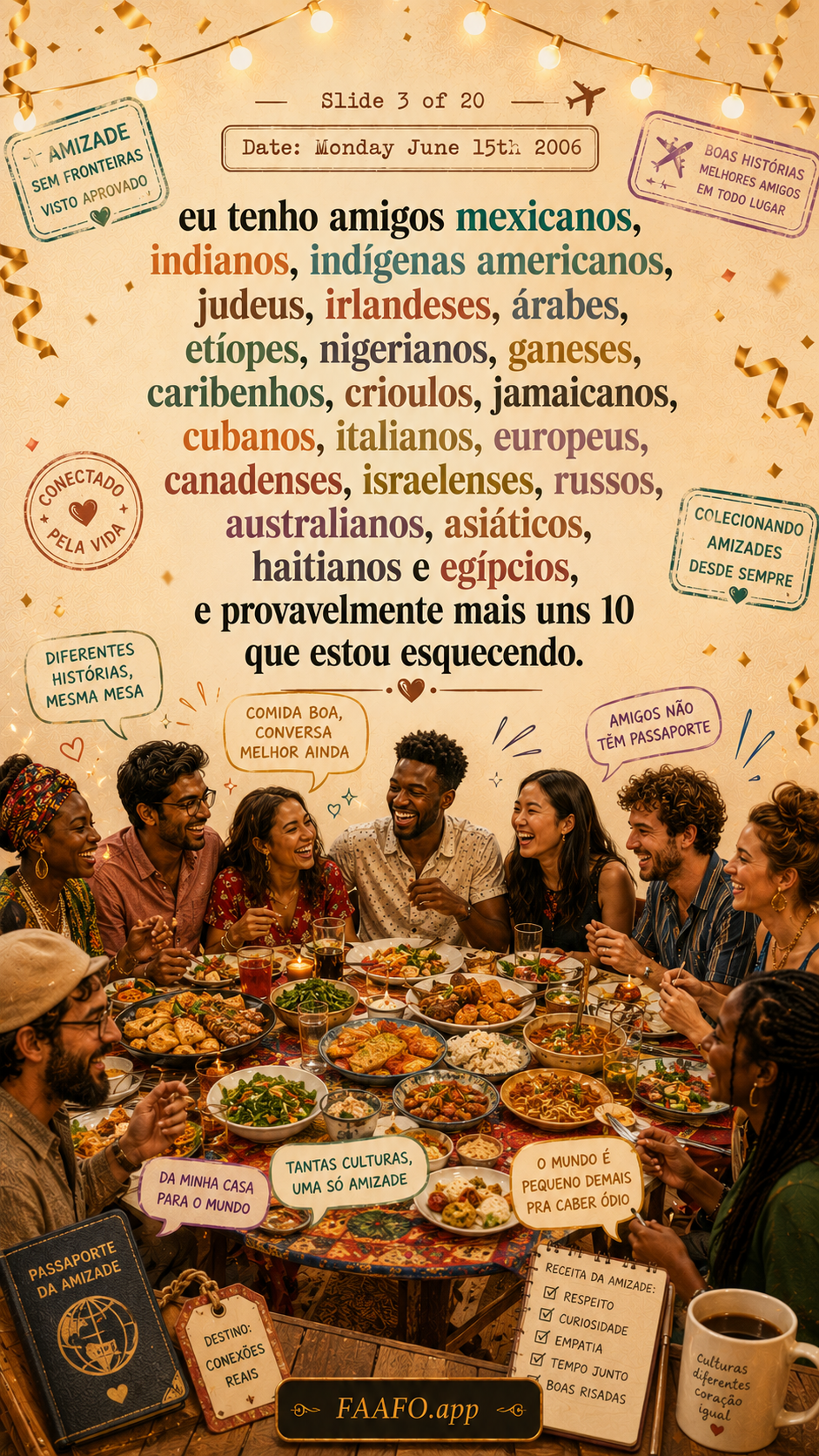
i have friends who are mexican, east indian, native american, jewish, irish, arab, ethiopian, nigerian, ghanaian, caribbean, creole, jamaican, cuban, italian, european, canadian, israeli, russian, australian, asian, haitian, and egyptian, and probably 10 others i’m forgetting.
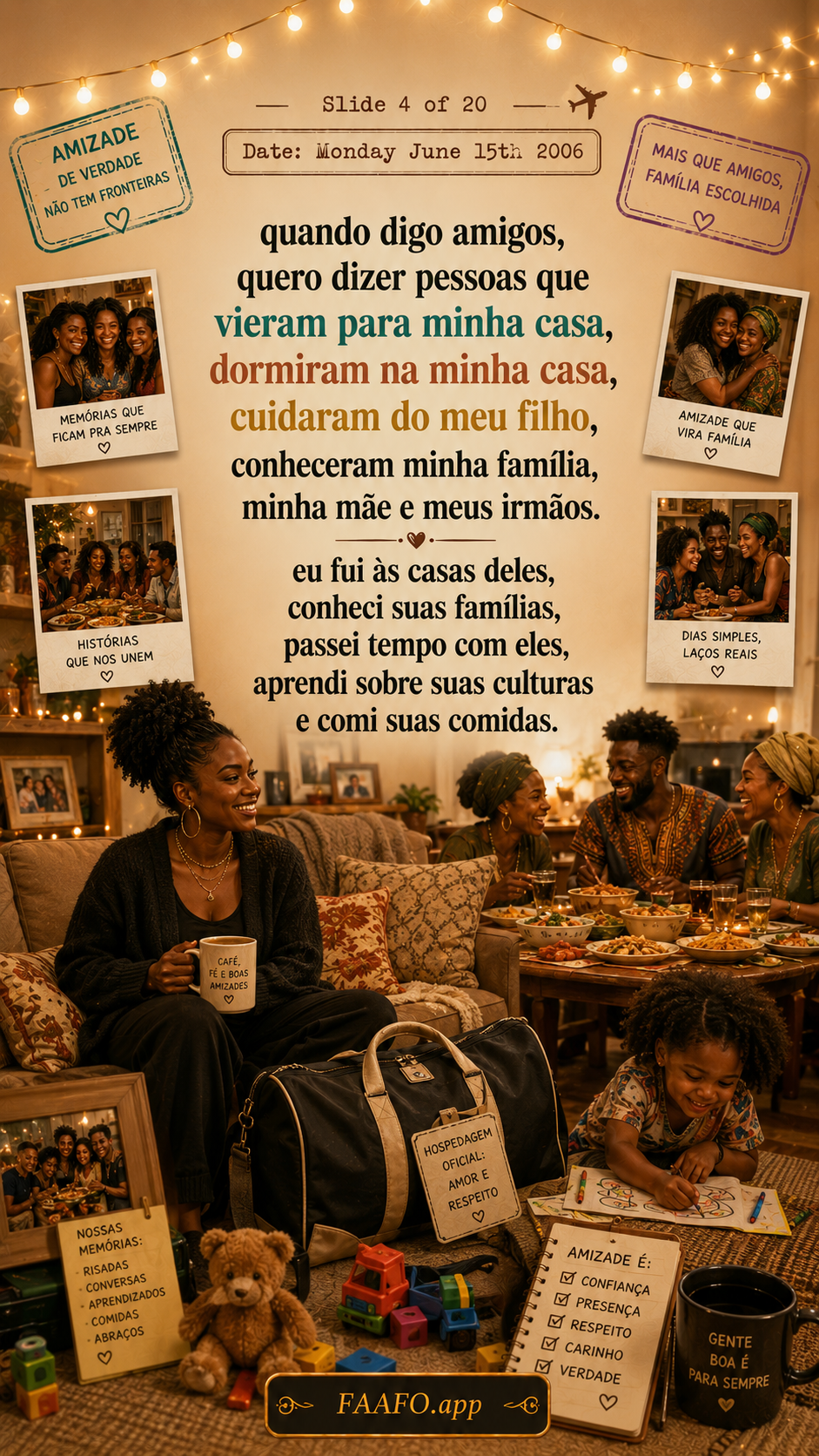
when i say friends, i mean people who have come to my home, spent the night at my house, watched my child, met my family, my mother, and my siblings. i have gone to their homes, met their families, spent time with them, learned about their cultures, and eaten their food.
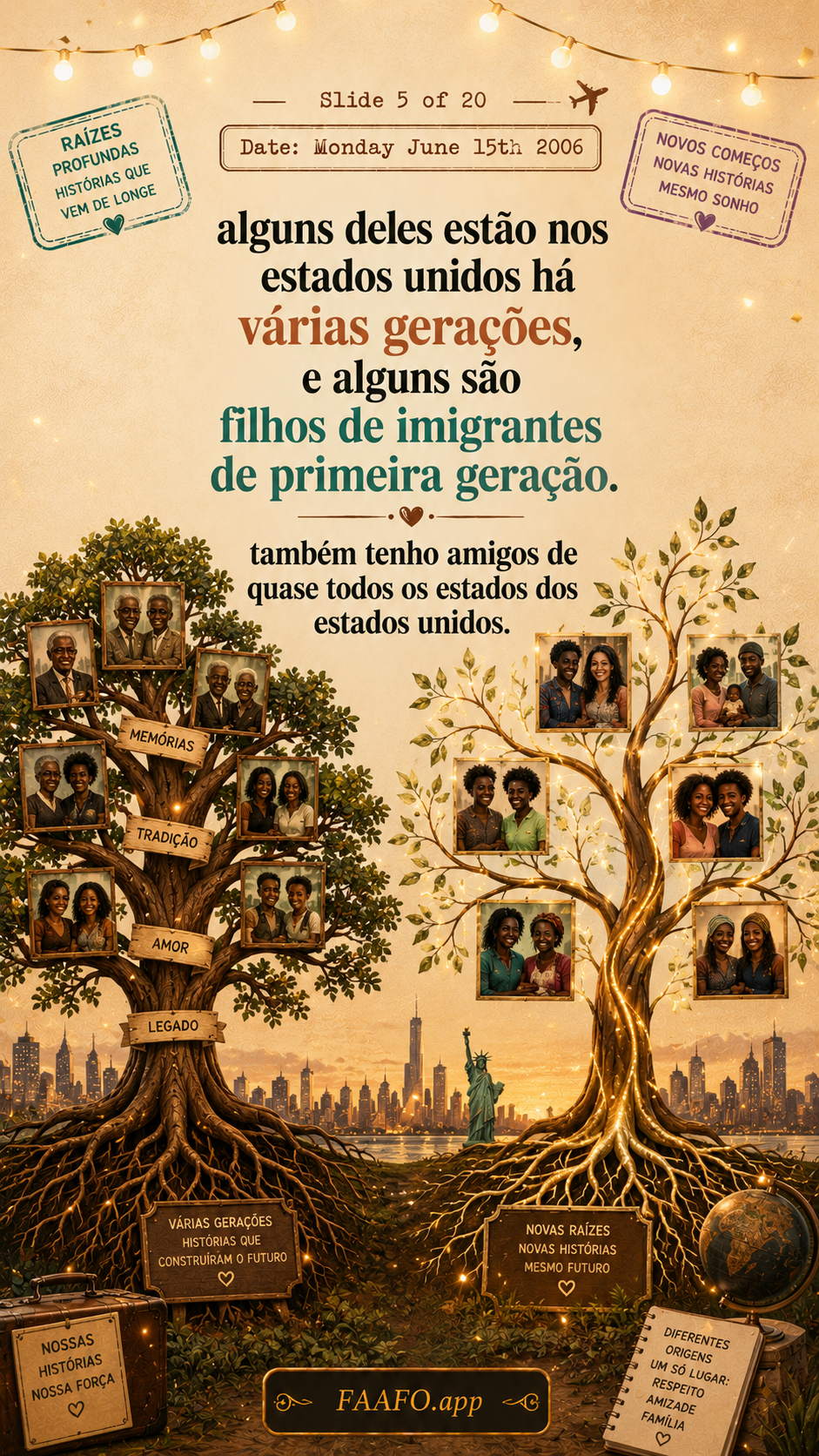
some of them have been in the united states for several generations, and some are first-generation children of immigrants.
i also have friends from almost every state in the united states.

i’ve had lovers and boyfriends who were jamaican, muslim, cuban, and a few others.
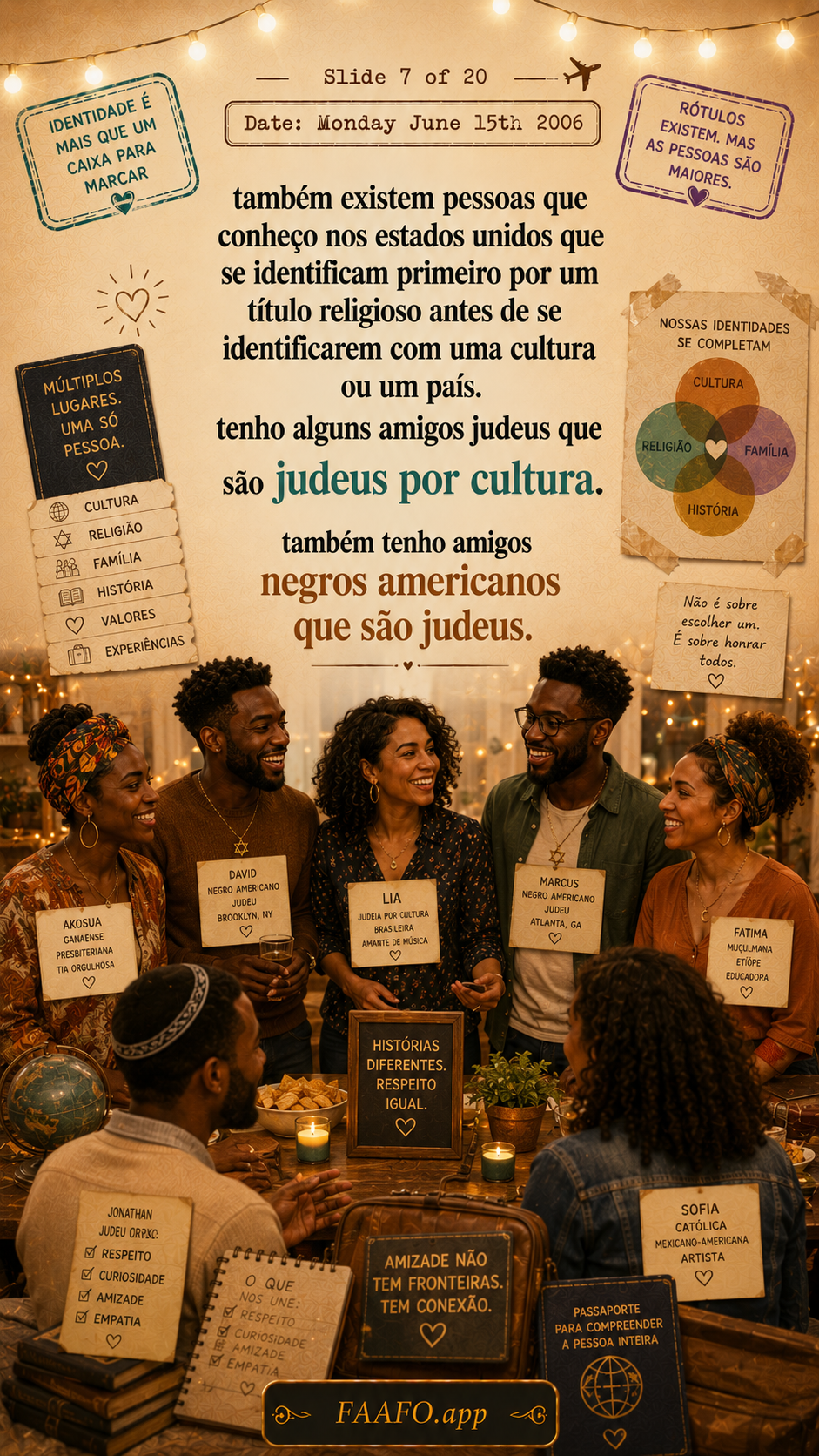
there are also people i know in america who identify with a religious title before they identify with a culture or country. i have some jewish friends who are jewish by culture. i also have black american friends who are jewish.
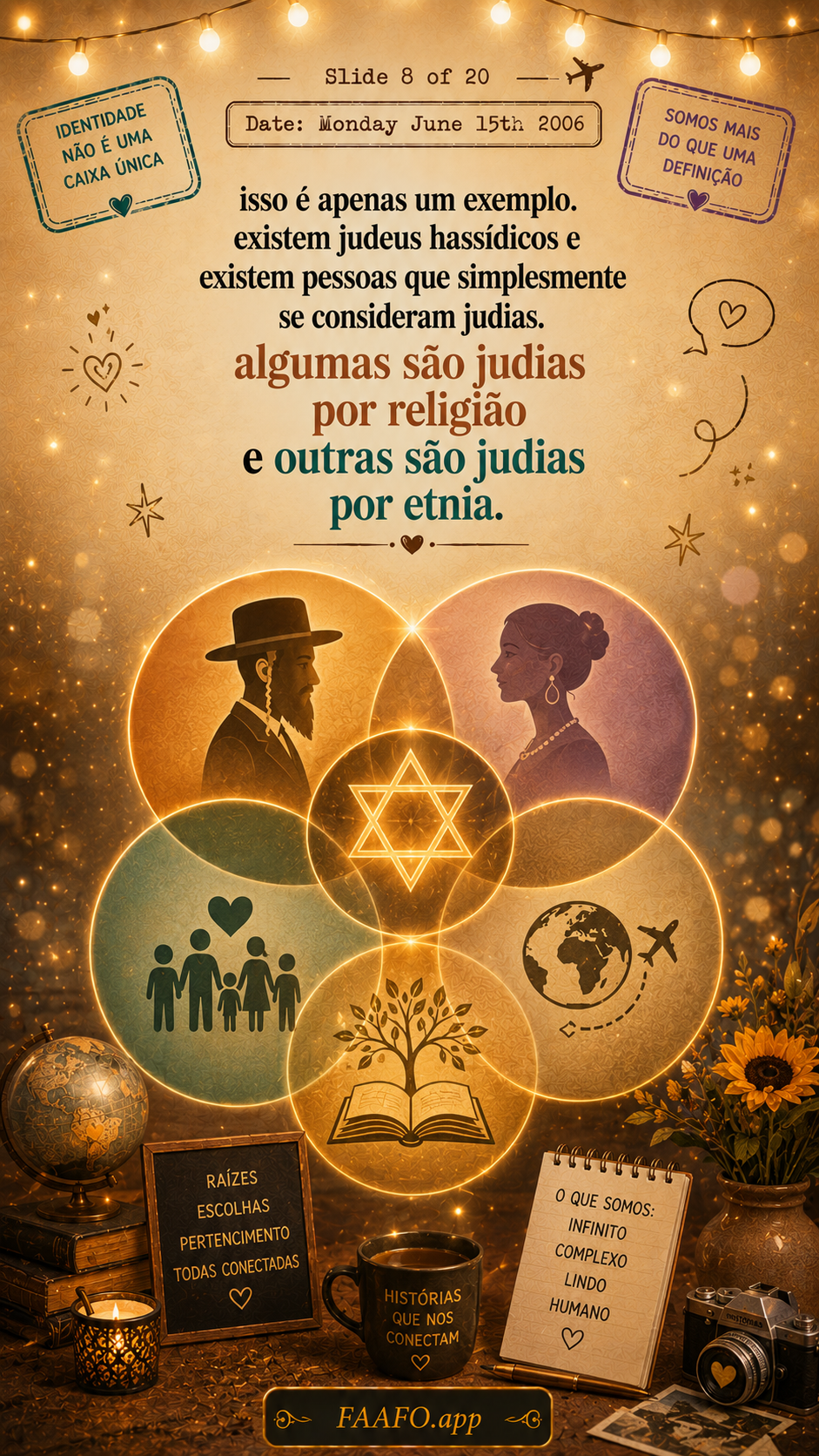
this is only an example. there are hasidic jews, and then there are people who simply consider themselves jewish. some are jewish by religion and some are jewish by ethnicity.
this is the beauty of america that is not found in most places, and i have definitely not found it in brazil.
i am not bringing this up as a judgment. i am bringing it up as wonderment, especially for those who try to take what is happening in less than a year and judge america by that, or for those who try to place me in a box and make me and others living abroad feel as if we are ignorant to culture and diversity.



many americans have what we call “mixed” or biracial people in their families. the difference between how it happened in america and brazil is that many married for love, even when marrying outside of one’s race was illegal.
there was no forced whitening that caused this mixing unless it was for love.
and many took that risk because love is always worth it.
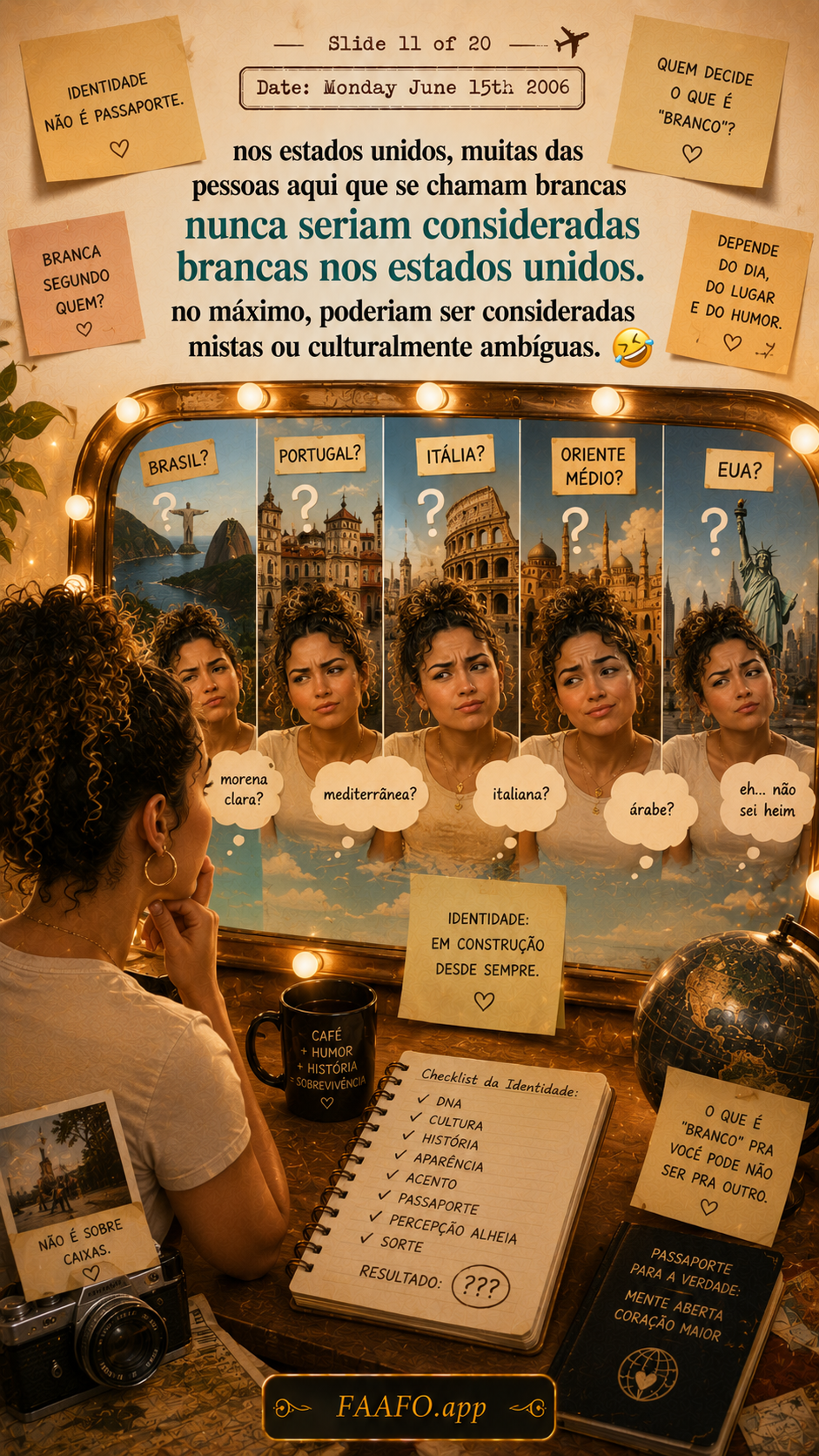
in america, many of the people here who call themselves white would never be considered white in the united states. at best, they might be considered mixed or culturally ambiguous. 🤣
which means people have no idea what they are, and they could probably pass for multiple ethnicities. but if they are dark enough, which varies, and have a certain vibe, they are going to be considered black, especially by the black community.
what i’m about to say next, i need to emphasize that of course this does not include everyone. there will always be exceptions everywhere in the world.
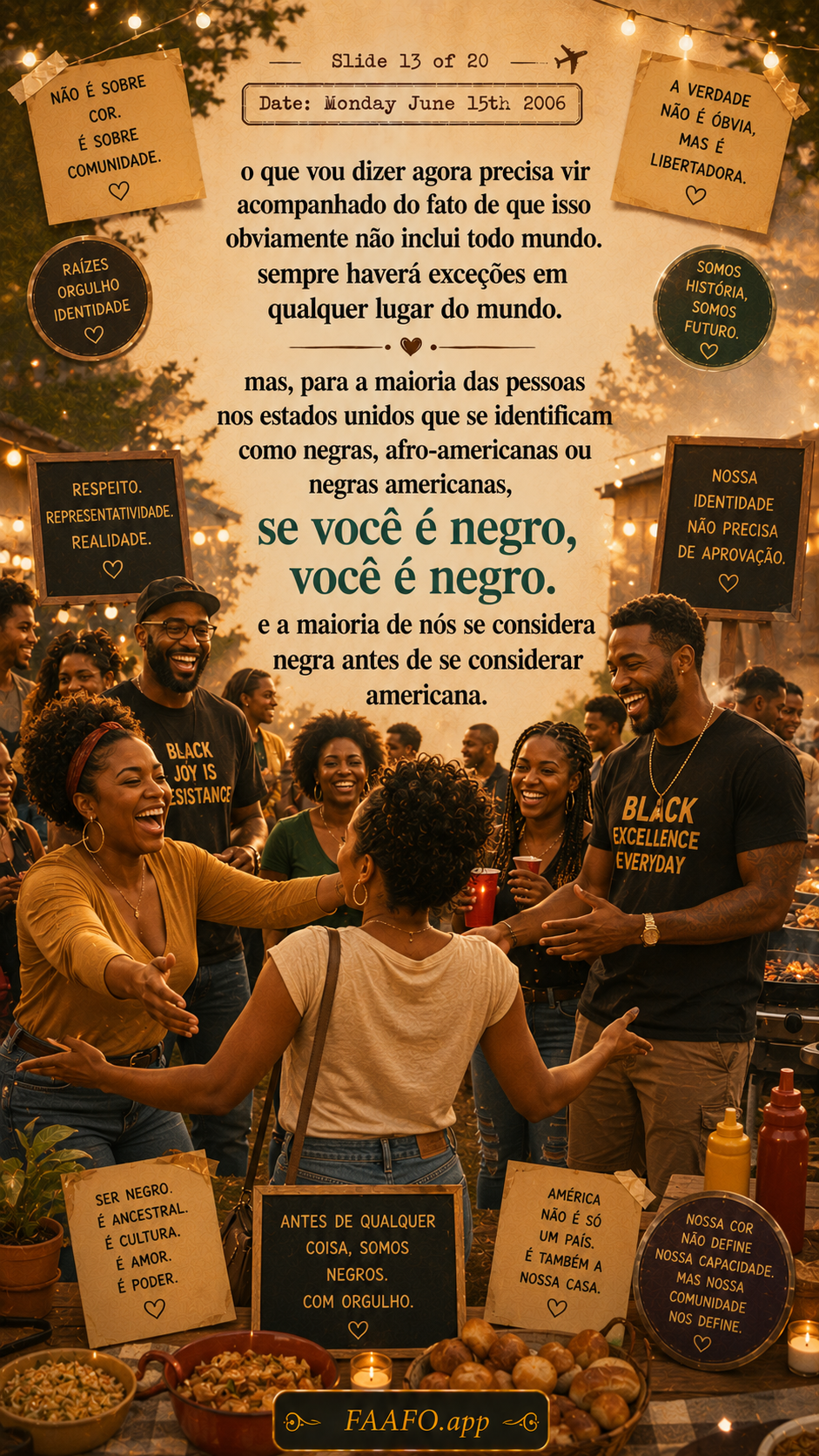
but for the majority of people in the united states who identify as black, african american, or black american, if you’re black, you’re black. and most of us consider ourselves black before we consider ourselves american.
here, it seems that people consider themselves brazilian before they consider themselves anything else… even before being black.
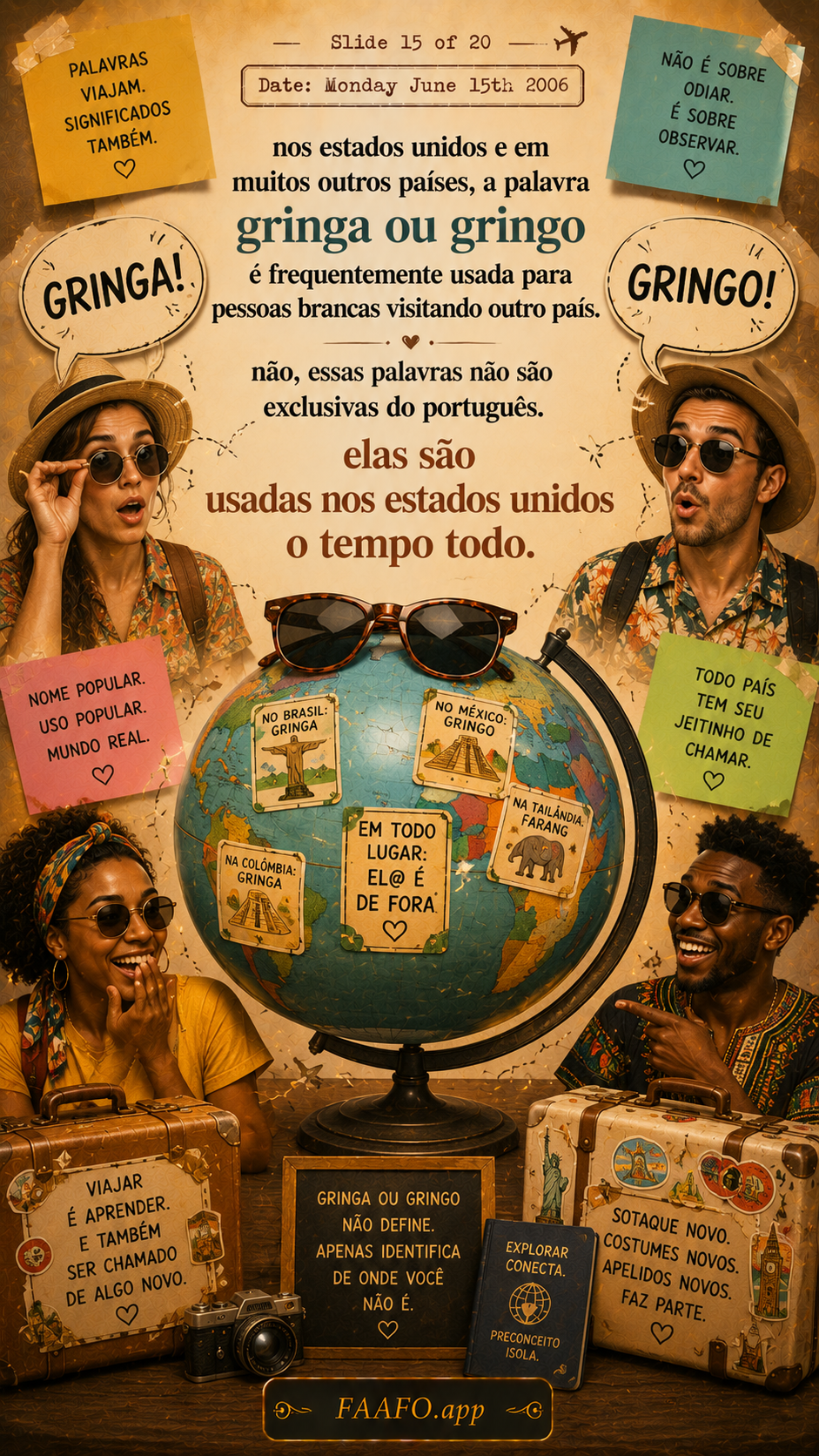
in the united states and many other countries, the word gringa or gringo is often used for white people visiting another country. no, those two words are not exclusive to portuguese. they’re used in america all the time.
but if we meet someone who looks and acts black, we’re just going to consider them black before we consider them brazilian. that comes afterward.
and that applies to anyone. it can be an asian, a canadian, an australian, a european, a colombian, or a mexican.

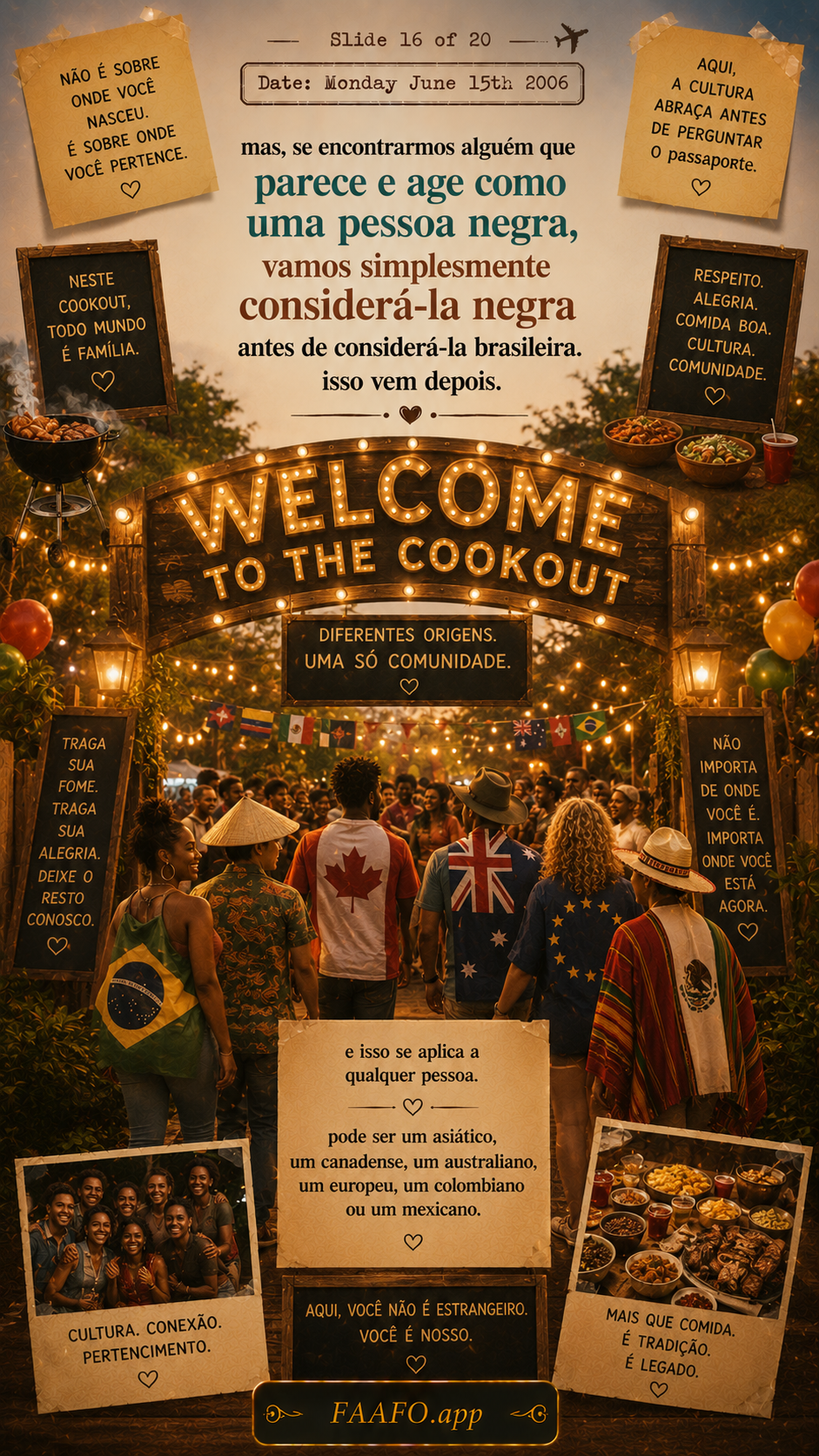
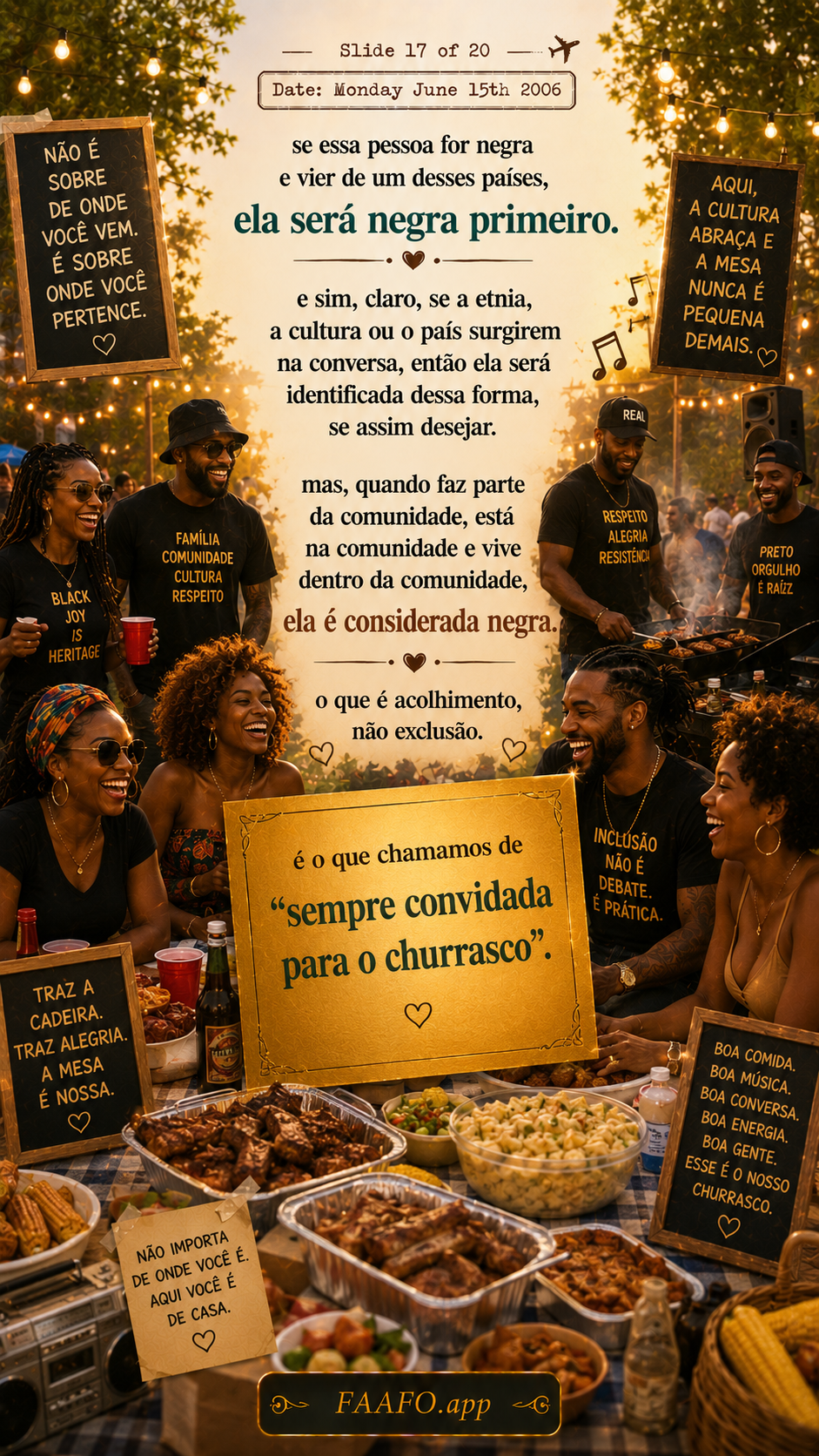
if they are black and from one of those countries, they are black first.
and yes, of course, if ethnicity, culture, or country comes up, then they are identified as such if they choose to be.
but when they are part of the community, in the community, and among the community, they are considered black.
which is welcoming, not exclusionary.
they are what we call “always invited to the cookout.”
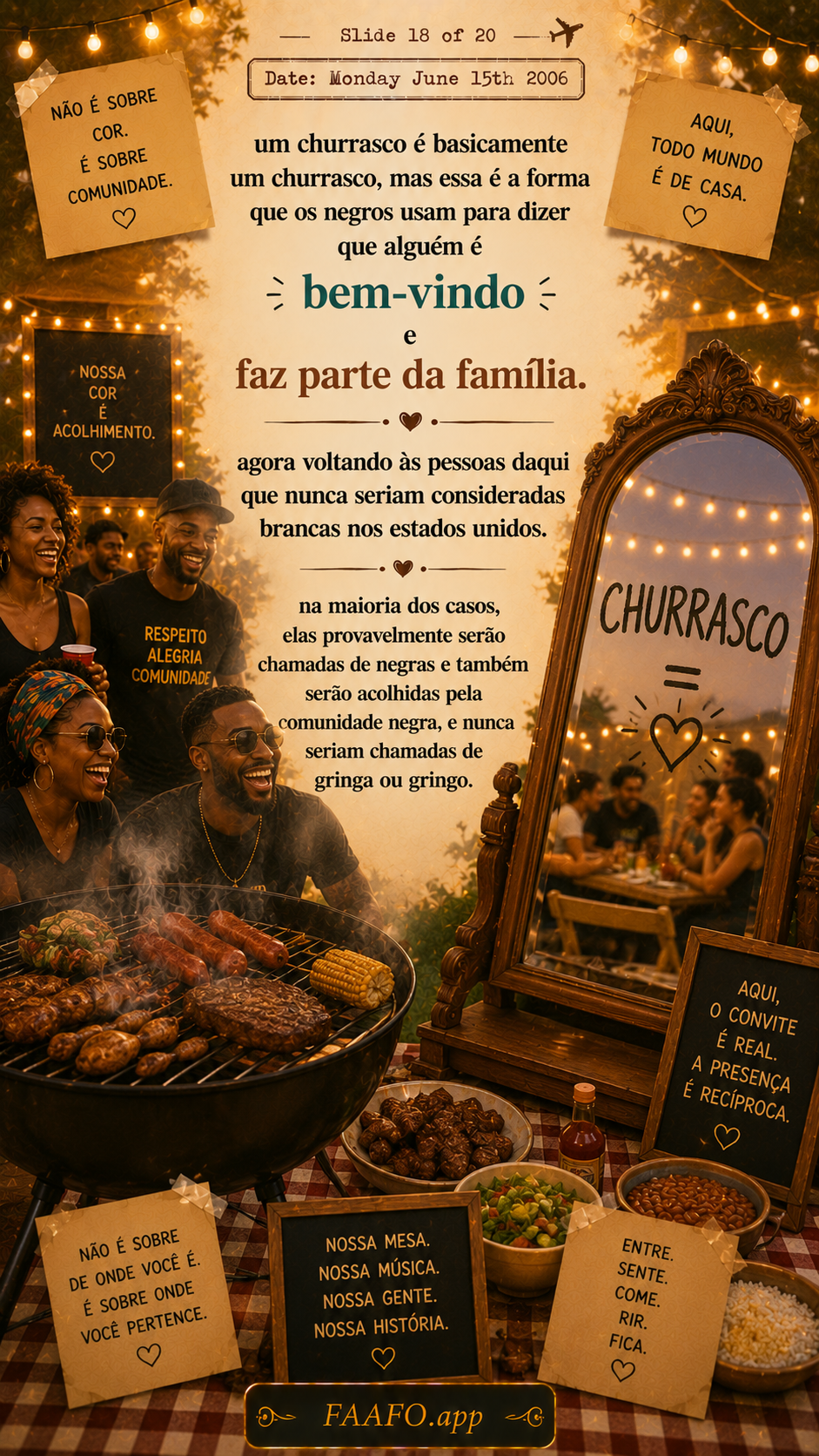
a cookout is basically a barbecue, but that’s black people’s way of saying that someone is welcome and part of the family.
now back to the white people here who would never pass in america as white.
in most instances, they’re probably going to be called black and invited into the black community as well, and would never be called a gringa or a gringo.
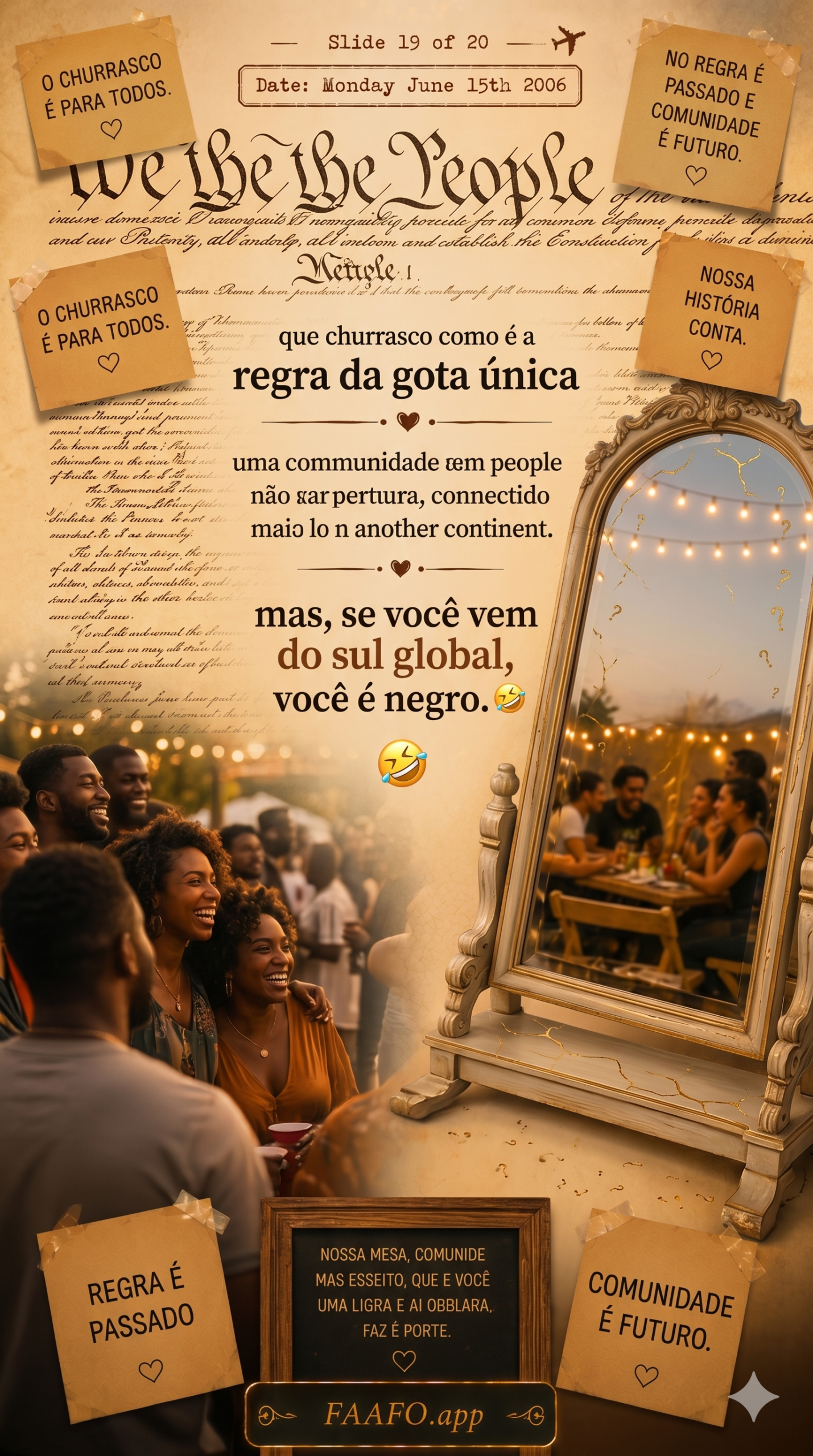
in america, when we refer to the global south and people of african descent, even those who historically fell under the one-drop rule, meaning if you had a drop of black blood you were considered black, many people are simply going to see you as black.
i won’t go further into that, but you can research what the one-drop rule meant during segregation in america.
but if you’re from the global south, you’re black. 🤣
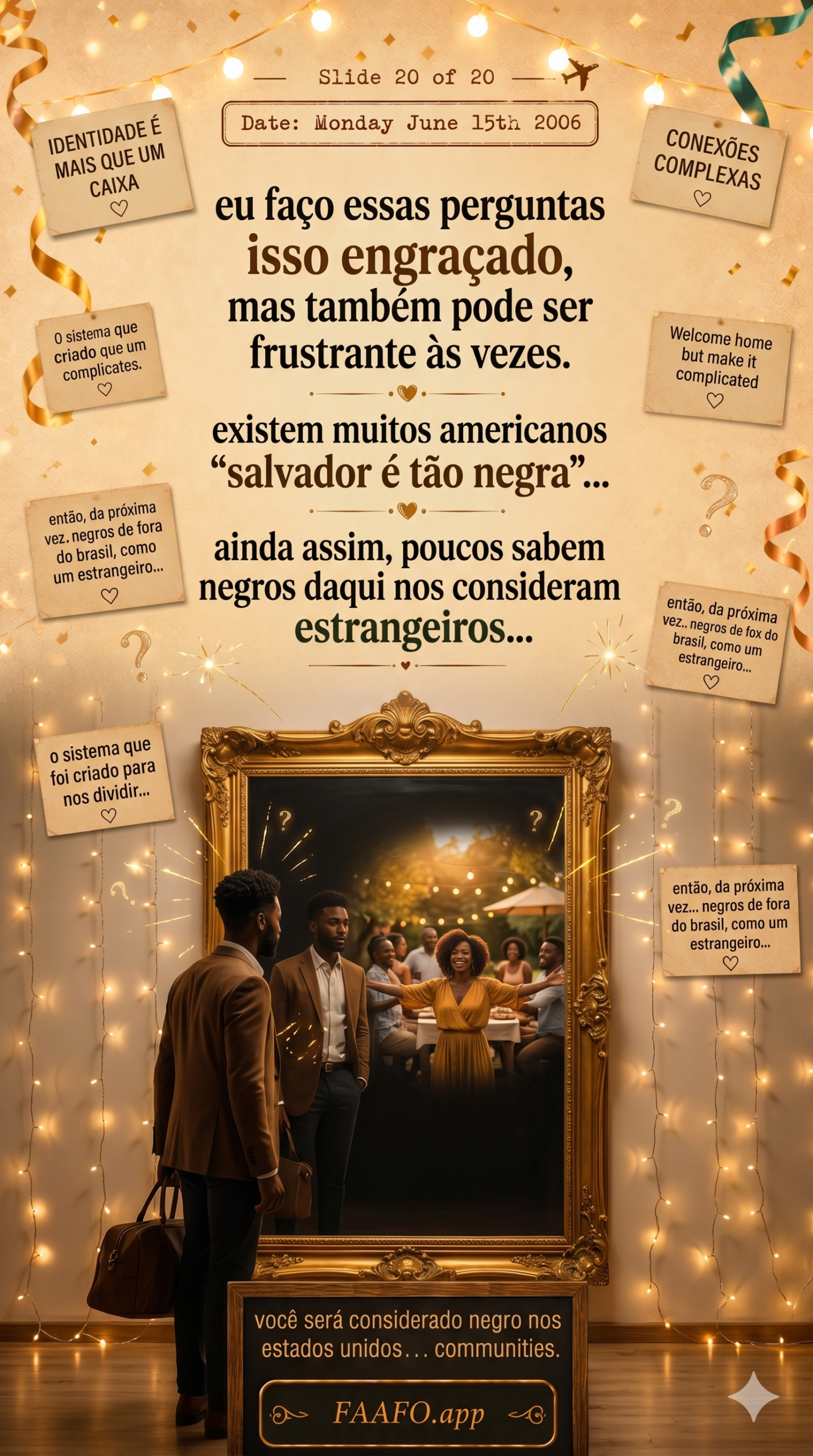
i ask these questions, make these statements, and share this information because i find it humorous, but it can also be frustrating at times.
there are many americans who idolize brazil, especially those who have never been here, and say things like, “salvador is so black” or “brazil is the blackest place outside of africa.”
yet very few are aware that many black people here consider us outsiders, many do not consider themselves black first, and many call us gringas and gringos.
the system that has been put in place to divide us all is quite impressive in its success rate, wouldn’t you agree?
so the next time you look at one of us black people from outside of brazil as an outsider, please remember these words:
you’re going to be black in america and accepted into our communities.